
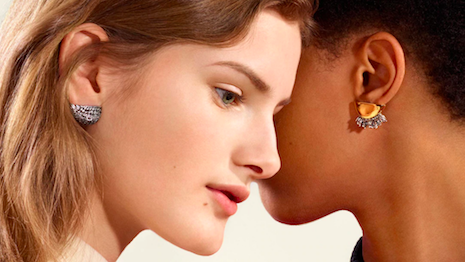
 Louis Vuitton's Bionic series continues with the dynamic new Wings and Leaves designs. Image credit: Louis Vuitton
By Pamela N. Danziger Today we live in an age of authenticity. Authentic brands, authentic communications and authentic relationships with consumers are demanded. An overwhelming 86 percent of consumers say brand authenticity is important when deciding which brands to support, according to a study conducted by Stackla. These findings were validated by another global study by Cohn & Wolfe. In that survey of 15,000 respondents, 91 percent of global consumers said they would reward a brand for its authenticity via “purchase, investment, endorsement or similar action.” Of this 91 percent, more than 60 percent will either “purchase or express increased purchase interest” in a brand they perceive to be authentic. Nowhere in business are the authenticity stakes higher than in the luxury market, where consumers’ trust in heritage, craftsmanship and quality is rewarded by their willingness to pay a premium for the privilege of ownership. In the current economy, where huge multinational conglomerates such as LVMH, with a fixation on the bottom line and quarterly growth and profits dominates, luxury brands are threatened by being too omni-present and ubiquitous. When a luxury brand is seen and available everywhere, its luxury value – its authenticity as true luxury – becomes diluted. Forbes.com contributor Walter Loeb presents an excellent overview of the delicate balance LVMH faces maintaining exclusivity and increasing accessibility. Authenticity is the ultimate challenge for luxury brands “Authenticity is considered the challenge for the luxury segment of our time,” write Patricia Anna Hitzler and Günter Müller-Stewens of the University of St. Gallen, Switzerland, in a study entitled “The Strategic Role of Authenticity in the Luxury Business.” In this study, the authors define the primary drivers of luxury brand authenticity to be craftsmanship, scarcity of supply, unique aesthetics and link to origin. Further, Ms. Hitzler and Mr. Müller-Stewens advise that profits must take a back seat to more lasting values and ideals for a truly authentic luxury brand status to be earned: “Meaningfulness and long-term orientation are guiding principles, which an organization that wishes to be perceived as authentic should pay special attention to. This may include motives, such as preserving jobs or fostering historical and cultural heritage. “Striving for profit, the experts underscore, is, of course, vital for the survival of an organization. Nevertheless, the targeted realization of profits is not solely decisive for fulfilled and lasting satisfaction. “One expert signalized: ‘There must be something else apart from the world of figures.’ This ‘something else’ is the higher aim, a mission that should be part of the identity of a luxury organization, which, along with its values, gives the enterprise a framework in which it should operate.” With this perspective in mind, I studied two of the world’s most highly regarded luxury brands, Louis Vuitton and Hermès, to see how they stacked up in authenticity. At first blush Louis Vuitton ranks high on the Cohn & Wolfe Global Authentic Brand 100 list, rated No. 65. Hermès, by contrast, is a no show on that list. But appearances can be deceiving, as in my view Hermès stands head and shoulders above Louis Vuitton in authentic luxury. Here is why: Authentic luxury whispers, it does not shout Overall, LVMH is far more heavily invested in marketing and selling expenses than Hermès. In 2017, 38.4 percent of the corporation’s overall revenue of €42.6 billion was allocated to marketing and selling expenses. By comparison, Hermès devoted 29.8 percent of its €5.5 billion revenues to selling, marketing and administrative expenses. However, these figures are not a strictly apples-to-apples comparison as LVMH includes 70 individual brands versus Hermès’ one. Forbes’ list of the world’s most valuable brands drills down to specifics. Louis Vuitton (the brand), ranked No. 15 overall and valued at $33.6 billion, is reported to generate $12.9 billion in sales and invests $5.4 billion – 42.9 percent of sales – on company advertising. If that is not shouting, I do not know what is. (Note: LVMH does not report revenues of its individual brands.) By contrast Hermès spends a reported 5 percent of sales ($298 million of $6 billion in revenues) on advertising. Subtly and quiet elegance is Hermès’ approach to advertising, not wide exposure such as Louis Vuitton. Authentic luxury is not for everyone, but for that special someone Yes, Louis Vuitton’s logo monogram canvas has a heritage that spans more than a century, being first introduced in 1896. But today, despite the high price commanded for its canvas totes, Louis Vuitton and those LV bags may be the world’s biggest perpetrator of logo pollution. Everywhere you go, an LV bag is lurking. Ubiquity stands in complete opposition to the code of conduct of an authentic luxury brand. Hermès does the opposite of Louis Vuitton’s in-your-face branding. Its style is distinctive and immediately recognizable to the cognoscenti, though in our celebrity-obsessed culture, the Hermès brand has become more widely recognized. And while celebrities may proudly wear Hermès – who else can really afford it? – they own the brand, but are not owned by the brand. Victoria Beckham is said to have an Hermès handbag collection worth more than $2 million. While Hermès rejects celebrity endorsements as a marketing strategy, Louis Vuitton fully embraces it. For example, Angelina Jolie was paid some $8.5 million to represent the brand in a single ad campaign in 2011. This reputedly was one of the highest endorsement deals ever for one advertising campaign. In this Louis Vuitton breaks another cardinal rule of luxury brand marketing, as described by Vincent Bastien and Jean-Noël Kapferer in a chapter in 2013’s Luxury Marketing: A Challenge for Theory and Practice: “Celebrities are to be used with caution in the luxury strategy, if the brand wants to build its pricing power, distinction, style and sustained appeal. They are not used as selling agents, for new customers to buy the product through an imitation model,” they advise. Hermès does it right, using true brand purchasers to give authentic testimony of the brand’s extraordinary value.
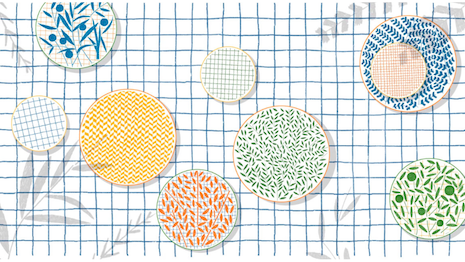 Hermès' collection of china. Image credit: Hermès
 Pam Danziger is president of Unity Marketing