- No categories



By some counts, the argument for native mobile applications has never been stronger. But in making that claim, are we leaving out a huge segment of online businesses?

While your peers and competitors are chasing the latest thing, they are probably neglecting the basic, proven approaches to improving mobile commerce.

As we are all planning in earnest for the 2015 holiday season, here are a few lessons to keep in mind to make this coming December a month to remember.
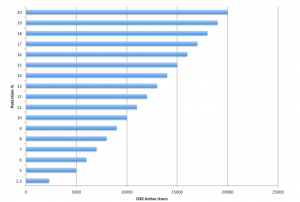
The cost of gaining app users reached an all-time-high in March, when Fiksu’s Cost Per Loyal User Index data showed that the cost of acquiring a single loyal iOS app user surpassed the $3 mark, a 113 percent rise over the previous year.

As we move more of our personal data to the cloud, the risk of exposure to cyber criminals, and with it the relevance of 2FA, increases.

It can take years to fully understand your customer base, but you can start by identifying your ideal customer. Build a customer profile or buyer persona, and use this as a guideline for all of your marketing activities.

A recent Flurry study indicates that messaging apps outperform other apps in terms of customer retention and engagement.

U.S. consumers now spend close to three hours each day on their mobile phones, yet they do the bulk of their online purchasing on desktop and laptop computers with larger screens and physical keyboards, making it easier to browse and type in credit card numbers than on smartphones.

Luxury retail is being transformed by the emergence of digital experiences, representing a strategic investment for retailers brave enough to rethink how online sales should work.

Younger consumers show a growing preference for texting and messaging over more traditional social media channels such as Facebook, Twitter and LinkedIn.

Launching a new application can be scary. And for good reason. Most businesses invest between $50,000 and $1 million in developing their new app, according to Kinvey’s survey on the State of Enterprise Mobility (2014).

While RWD is gaining traction today, many major companies realize the limitations of simply reflowing the same content on every device, and the benefits of offering a unique experience for each device category.
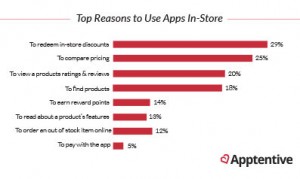
Even if mobile apps are not generating in-app revenue, retailers cannot ignore the value that retail apps provide their customers.

In just one year, from June 2013 to June 2014, mobile application usage was up 52 percent, with more consumers using their smartphones than their laptops to make buying decisions – even though when it came to completing purchases, consumers were more comfortable on their laptops.

Ad blocking has grown by 41 percent globally in the last 12 months. Sixteen percent of the United States online population blocked ads in the second quarter of 2015, equaling 45 million monthly active users.

For people involved in the mobile advertising industry, there is one burning question that has been an elephant in the room for the last few years: When will ad dollars begin to catch up with consumer behavior?

We looked at five businesses benefiting from data science and what exactly it is that data scientists do to better understand how these companies achieved success.
The Federal Trade Commission’s Endorsement Guides were revised in 2009 to provide advertisers with guidance on how to apply traditional legal principles regarding testimonials and endorsements to new marketing channels and techniques.

Why is it so hard to succeed in a market where consumers love online shopping, mobile commerce and foreign brands in equal measure?

Visibility in a person’s digital life – even two-way interactions with them – does not necessarily mean you have built this connection.

In 2014, there were 4 billion Internet-enabled devices globally. In the next five years, that number is estimated to soar to 200 billion devices, an average of 26 per person.