- No categories


We are in the middle of a love fest with mobile apps. Every brand feels the need to develop one, believing this is its mobile panacea – the easy route to be relevant, accessible and cool. Think again.

Retailers and brands need to have a strong marketing strategy for in-market shoppers, from the initial thought-to-shop all the way through the research, selection and purchase of their item.

Marketers are tapping location-based services to compel customers to use apps to engage with the brand, product or venue via their mobile phone. They need to know the three R’s of LBS.

Retailers and brands must learn how to engage connected shoppers through the entire pre-store, in-store and post-store buying cycle.

High-end brands face challenges and opportunities more than mainstream retailers do. While the market for luxury goods is necessarily narrow, retailers in these markets tend to know their customers and prospects better than less focused businesses.
The rapid adoption of the smartphone and the mobile medium is one of the most important trends that shopper marketers are tracking this year and next.

Google recently predicted that by 2015, 50 percent of all targeted display ads will be bought using real-time bidding. Make no mistake, the programmatic buying of audiences is a game-changer.

What are the key trends with mobile applications and what will Apple, Google, Microsoft, Research In Motion and others do that will affect brands in their marketing and commerce?

If you spend any time on the digital marketing blogs or attend industry pundit-fests, you are sure to come across the unfortunately worded new concept of transmedia.

There will be parity between mobile and traditional display when it comes to data and media exchanges and demand-side platforms, but mobile advertising must first overcome some barriers.

The release of the Samsung’s Galaxy tablet and Sony’s Google TV are heralding in a new era in the mobile ecosystem – the Android Age.
With the increased mobile commerce activity the industry has seen especially during the holiday season, the debate is over: consumers’ rapidly evolving research and buying behavior shows that mobile needs to become a critical piece of any online sales strategy.

To elevate a brand through mobile, firms need to be asking several key questions to ensure that a comprehensive and engaging, rather than a me-too approach, is taken towards application development.

Web sites and mobile applications which present information in terms that reflect local context resonate better with target users and will win in the long run.

It sounds obvious: optimize for the right audience to achieve your online marketing goals. But many marketers do not – for several reasons.
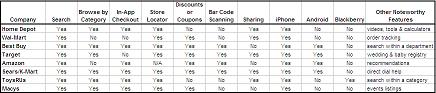
The nation’s leading retailers have pulled out all stops for their holiday shopping applications. How do they fare? And what are the takeaways for luxury marketers and retailers?

Consumers develop strong ties to certain luxury items based on long-held affiliations, favorable public perception or an aura of exclusivity. However, luxury brands face increasing competition for customer attention and dollars.
The truth of the matter is that applications are ads, plain and simple. But how do brands measure advertising’s influence on consumer behavior?
Going mobile is not a one-size-fits-all proposition. Luxury retailers can choose from three general approaches.
QR codes offer a number of benefits for marketers. One of the most important is the ability to tie together the print, mobile and Web channels to increase the response rates on multichannel marketing efforts.
What has all the recent innovation and change meant for mobile commerce and consumers? Simply put: A lot of choice, but not much context.